
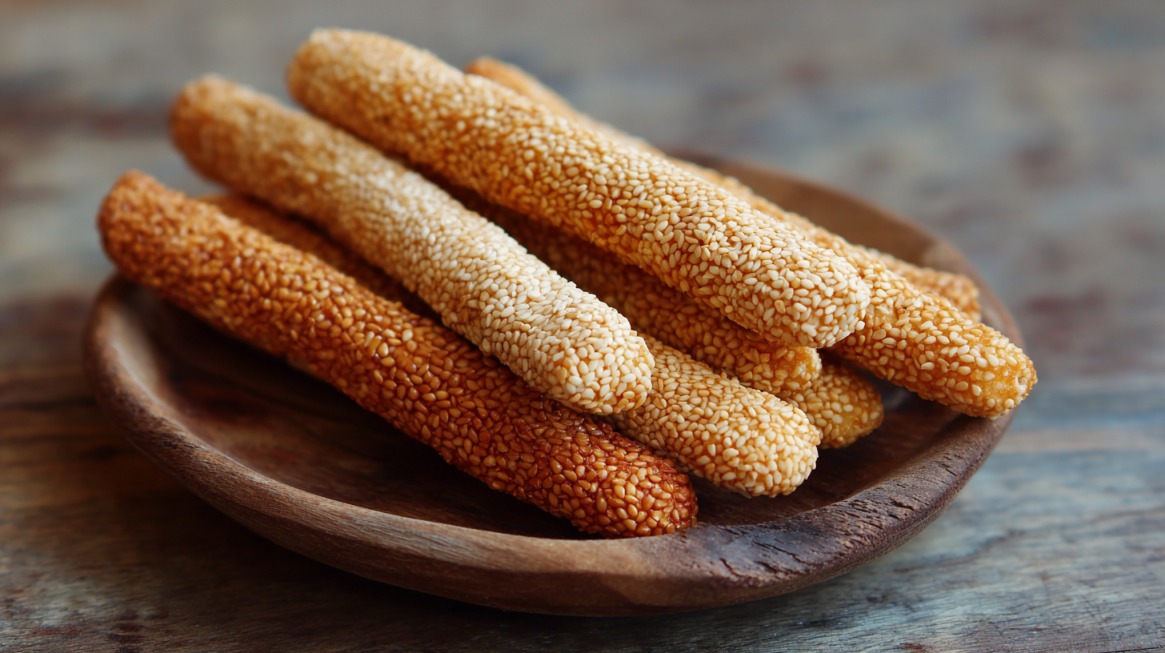
Sesame sticks are crunchy, savory snacks made mainly with sesame seeds and wheat flour.
Many people enjoy them in trail mixes, sprinkled over salads, or eaten straight from the bag.
Snack aisles often market them as a better alternative to chips, which raises questions about nutritional value, benefits, and potential downsides.
Having a look at ingredients and nutrition facts helps clarify how sesame sticks fit into a balanced diet.
Nutritional Breakdown (Per 1 oz or 30 g Serving)

Nutrition labels clarify how sesame sticks distribute energy and nutrients. Brand variation exists, though general patterns remain consistent across most products.
Macronutrients
Energy density defines the overall profile. Fat supplies most calories, while protein and fiber remain limited. Typical values show how intake accumulates quickly.
- Calories around 150 to 160 kcal
- Total fat averaging 10 to 10.4 g
- Saturated fat close to 1.8 g
- Protein near 3 g
- Carbohydrates about 14 g
- Sugar reported at 0 g
- Dietary fiber roughly 0.8 g
Low protein and fiber explain weaker appetite control compared with snacks such as whole nuts or legumes.
Micronutrients
Minerals raise nutritional value slightly above refined crackers. Sesame seeds contribute most of these nutrients.
- Calcium about 48 to 50 mg or 4 to 5 percent DV
- Iron roughly 2.5 mg per cup when extrapolated, near 14 percent DV
- Potassium around 250 mg per cup
- Sodium ranging between 400 and 1000 mg per cup
- Sodium per ounce close to 18 percent DV
Sodium levels vary widely, making label comparison important before regular consumption.
Calorie Source Breakdown
Energy distribution highlights fat as the dominant contributor. Percentage estimates help explain calorie density.
- Fat at roughly 57 percent
- Carbohydrates are near 35 percent
- Protein close to 7.6 percent
High-fat contribution explains both flavor satisfaction and rapid calorie accumulation.
How to Make Sesame Sticks Healthier
Better use of sesame sticks depends on context, portions, and food combinations rather than total avoidance.
Snack quality improves when attention is given to preparation method, sodium control, and pairing strategy. Small changes make a noticeable difference in calorie control and fullness while preserving crunch and flavor.
Pairing Tips
Pairing sesame sticks with foods that increase volume, fiber, and protein helps slow eating and improves satiety.
Supportive foods shift sesame sticks into a complementary role instead of a primary calorie source.
- High fiber produce works especially well because it adds bulk with minimal energy cost.
- Apples or pears that add crunch and soluble fiber
- Berries that increase portion size with very low calorie impact
- Meal focused pairings further improve balance by adding protein and micronutrients.
- Salads built with leafy greens and lean protein such as chicken, fish, tofu, or beans
- Grain bowls that already include vegetables and legumes
Such combinations promote steadier energy levels, reduce sodium impact per bite, and limit the tendency to overconsume sesame sticks alone.
DIY Suggestions
Home preparation offers complete control over ingredients and cooking technique. Small formulation changes noticeably improve nutritional quality without sacrificing texture.
- Cooking method plays a major role in fat content.
- Baking instead of frying to reduce oil absorption
- Ingredient choices also influence fiber and sodium levels.
- Whole wheat flour used in place of refined flour to increase fiber
- Lower salt levels to manage sodium intakeFlavor can remain satisfying through seasoning choices that do not rely heavily on salt.
Garlic powder, paprika, cumin, or dried herbs used for seasoning
Homemade versions allow customization that supports long term dietary goals more effectively than packaged options.
Health Benefits of Sesame Sticks
While sesame sticks are not a superfood, they are not considered fast food, and they do offer several nutritional positives, primarily stemming from their ingredients.
The key benefits are best realized when consumed in moderation as part of a balanced diet.
Healthy Fat Content
One of the most notable benefits of sesame sticks lies in their unsaturated fat profile.
- Monounsaturated fats may help reduce bad (LDL) cholesterol levels.
- Polyunsaturated fats, including omega-6 fatty acids, support heart and brain health.
These have been linked to improved cardiovascular function when consumed in place of saturated or trans fats. However, it’s important to maintain portion control to avoid excessive calorie intake.
Key Minerals
- Calcium is important for bone health, nerve transmission, and muscle contraction.
- Iron is crucial for oxygen transport in the blood, helping to prevent fatigue and support energy levels.
- Potassium helps maintain fluid balance, regulate blood pressure, and support muscle and nerve function.
While the mineral content of sesame sticks won’t cover your daily needs, occasional intake can contribute to your overall nutrient goals when combined with a varied diet.
Low Sugar Content
Most sesame sticks are sugar-free or contain less than 1 gram of sugar per serving.
- Monitoring blood sugar levels
- Following a low-carb or low-sugar diet
- Trying to reduce added sugar consumption
Unlike many snack foods, sesame sticks provide a savory option that doesn’t spike glucose, making them a more balanced choice of packaged snacks.
Health Drawbacks and Considerations
Despite their benefits, sesame sticks also come with several nutritional limitations, especially when consumed in large portions or on a regular basis.
These concerns are primarily related to processing and macronutrient imbalance.

High Sodium Levels
Salt content is the most significant nutritional drawback of sesame sticks.
- 1 ounce (about a handful) can contain up to 18% of the recommended daily value (DV)
- 1 cup may reach 40–45% of the DV, depending on the brand
Regularly eating high-sodium snacks may contribute to elevated blood pressure, water retention, and increased risk of heart disease.
Low Protein Content
Compared to nuts, seeds, and other plant-based snacks, sesame sticks are relatively low in protein, with just 3–4 grams per ounce.
- Reduced satiety, you may not feel full after eating
- Increased likelihood of overeating, especially when paired with the stick’s addictive crunch and saltiness
For better appetite control, pair sesame sticks with a higher-protein food like cheese, hummus, or Greek yogurt.
Low Fiber Content
Fiber is critical for digestion, blood sugar control, and long-lasting satiety. Unfortunately, sesame sticks contain less than 1 gram of fiber per serving, which is low compared to snacks made from whole grains or legumes.
- Low fiber may leave you feeling hungry again soon after eating.
- A diet consistently low in fiber can impact gut health and regularity.
Look for whole wheat versions of sesame sticks for a slight fiber boost, or combine them with fruits or vegetables to increase overall fiber intake.
@yasminstips Sweet #sesame #sticks – perfect sweet fix! Recipe in bio 😍 | #urdurecipe #recipes #foodtiktok #pakistan #easycooking #dessert ♬ Humko Humise Chura Lo (Instrumental) – Chandrakant Lakshpati & Harpreet Singh
Calorie Density
Sesame sticks are calorie-dense: just a small handful can contain 150–170 calories.
Their crunchy texture and savory flavor make them easy to overeat, especially when eaten mindlessly from a large container.
This calorie density, combined with low fiber and low protein, can lead to unintended excess calorie intake, a concern for those trying to manage weight or hunger levels.
The Bottom Line
Sesame sticks offer heart-healthy fats, useful minerals, and zero sugar.
High sodium content, low protein, and low fiber limit their role as an everyday staple.
Portion control remains key. Occasional enjoyment alongside nutrient-dense foods works best rather than relying on sesame sticks as a primary nutrition source.

Hi there, my name is Kelly Barlow and kellytoeat.com is my blog. Here, I write about various recipes I want to reccommend to readers.
I try to find the best possible recipes that can attract the attention of readers, and at the same time, I strive to write it in the most engaging manner possible.
When I was younger, I wanted to become a chef. Sadly, it wasn’t meant to be, but at the very least, I write about it.