
The best way to store cheese depends entirely on the type of cheese and how it was made. Cheese spoils for predictable reasons: too much air, too much moisture, or the wrong temperature.
Treating all cheeses the same leads to mold where it should not exist, dryness where moisture is essential, and flavor loss long before the cheese is actually unsafe.
When stored correctly, most cheeses last significantly longer and retain their intended texture and taste.
The Two Forces That Ruin Cheese: Air and Moisture
View this post on Instagram
Cheese is alive in a microbial sense. Even after aging, it continues to breathe and change. Storage is about controlling two opposing risks:
- Too much air dries cheese out and accelerates oxidation
- Too much moisture encourages unwanted mold and slime
Different cheeses sit at different points on this balance, which is why storage methods must vary by type.
Fresh Cheeses (High Moisture, No Rind)
Fresh cheeses are unripened and contain a large amount of water. They spoil quickly because bacteria grow easily in moist environments.
Examples include mozzarella, ricotta, cottage cheese, cream cheese, burrata, and fresh goat cheese.
These cheeses should always be kept cold, sealed tightly, and used quickly.
Best Storage Method for Fresh Cheese
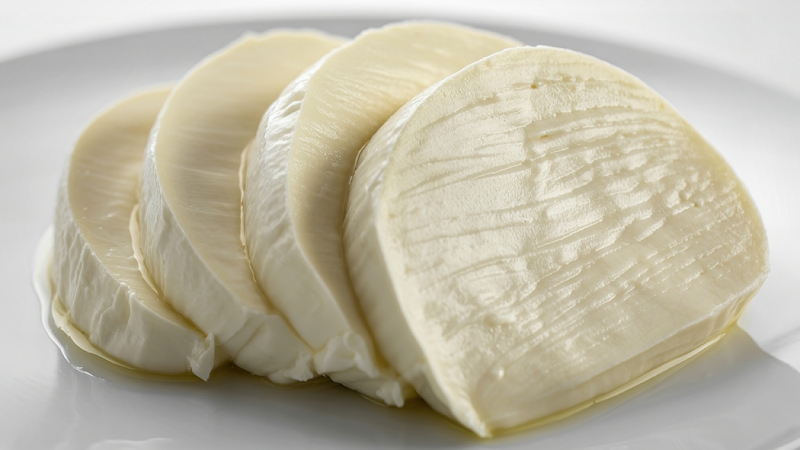
Fresh cheese belongs in its original container or an airtight container if transferred. If the cheese sits in liquid, keep it submerged. Exposure to air dries the surface and accelerates spoilage.
Fresh Cheese Storage
| Cheese Type | Storage Method | Typical Shelf Life |
| Mozzarella (fresh) | In a liquid, sealed | 3–5 days opened |
| Ricotta | Airtight container | 5–7 days |
| Cream cheese | Original foil or sealed | 1–2 weeks |
| Cottage cheese | Sealed container | 7–10 days |
Soft-Ripened Cheeses (Bloomy Rind)
Soft-ripened cheeses have edible white rinds and soft interiors. They continue to ripen after purchase and are sensitive to suffocation.
Examples include Brie and Camembert.
Best Storage Method for Soft-Ripened Cheese

Wrap loosely in cheese paper or wax paper, then place inside a partially closed container. This allows the cheese to breathe without drying out. Plastic wrap alone traps moisture and causes ammonia smells and slime.
Soft-Ripened Cheese Storage
| Cheese | Wrap Type | Shelf Life |
| Brie | Wax paper + box | 1–2 weeks |
| Camembert | Cheese paper | 1–2 weeks |
Semi-Soft and Semi-Hard Cheeses
These cheeses have lower moisture and firmer structure, making them more forgiving but still sensitive to improper wrapping.
Examples include Gouda, Havarti, Fontina, Swiss, Monterey Jack, and young Cheddar.
Best Storage Method for Semi-Soft and Semi-Hard Cheese
@dr.karanr Cheese storage! @ConVino Board ♬ original sound – Dr Karan Rajan
Wrap in wax paper or parchment, then loosely overwrap with plastic or place in a resealable container. The inner layer controls moisture; the outer layer limits airflow.
Avoid airtight plastic directly against the cheese.
Semi-Soft and Semi-Hard Cheese Storage
| Cheese | Storage Method | Shelf Life |
| Gouda | Wax paper + bag | 2–3 weeks |
| Havarti | Parchment + container | 2–3 weeks |
| Young Cheddar | Wax paper + wrap | 3–4 weeks |
Hard and Aged Cheeses
Hard cheeses have very low moisture and are the most durable. They resist spoilage but dry out easily if exposed to air.
Examples include Parmesan, Pecorino Romano, aged Cheddar, Gruyère, and Manchego.
Best Storage Method for Hard Cheese

Wrap tightly in wax paper, then add a second layer, such as foil or a reusable wrap. The goal is to prevent dehydration while allowing minimal gas exchange.
Hard cheeses tolerate mold better than soft cheeses. Surface mold can usually be cut away safely.
Hard Cheese Storage
| Cheese | Storage Method | Shelf Life |
| Parmesan | Wax paper + foil | 1–2 months |
| Pecorino | Wax paper + wrap | 1–2 months |
| Aged Cheddar | Wax paper + bag | 4–6 weeks |
Blue Cheeses (High Flavor, Active Mold)
Blue cheeses contain intentional mold that spreads easily. They must be isolated to prevent cross-contamination.
Examples include Gorgonzola, Roquefort, Stilton, and blue cheese crumbles.
Best Storage Method for Blue Cheese
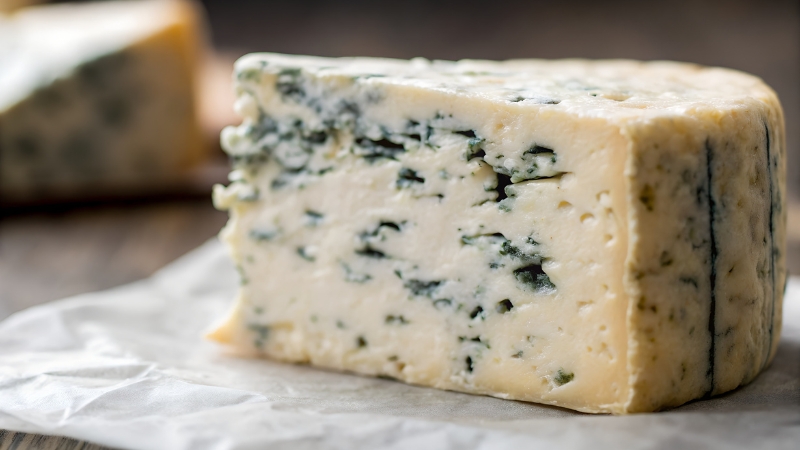
Wrap in foil or wax paper, then seal in a container. This limits mold spread while preserving moisture. Blue cheese should not be stored next to other cheeses.
Blue Cheese Storage
| Cheese | Storage Method | Shelf Life |
| Gorgonzola | Foil + container | 2–3 weeks |
| Roquefort | Foil wrap | 2–3 weeks |
Shredded and Pre-Sliced Cheese
Pre-shredded and sliced cheeses spoil faster becausethe increased surface area exposes more fat and protein to air and bacteria.
These cheeses should remain sealed and refrigerated consistently.
Shredded Cheese Storage
| Form | Storage Method | Shelf Life |
| Shredded | Original sealed bag | 5–7 days opened |
| Sliced | Resealable pack | 7–10 days |
Where to Store Cheese in the Refrigerator
The best place for cheese is the vegetable crisper drawer, where temperature and humidity are more stable. Avoid refrigerator doors, which experience frequent temperature swings.
Common Cheese Storage Mistakes
Most cheese waste comes from a few avoidable errors.
Storage Mistakes and Consequences
| Mistake | Result |
| Plastic wrap only | Slimy surface |
| Airtight containers | Mold growth |
| Leaving cheese exposed | Dry, cracked texture |
| Mixing blue cheese with others | Mold transfer |
Final Perspective
Cheese lasts longest when stored according to its structure, not its price or origin. Fresh cheeses need protection from air. Soft cheeses need room to breathe.
Hard cheeses need defense against drying. Blue cheeses need isolation.

Hi there, my name is Kelly Barlow and kellytoeat.com is my blog. Here, I write about various recipes I want to reccommend to readers.
I try to find the best possible recipes that can attract the attention of readers, and at the same time, I strive to write it in the most engaging manner possible.
When I was younger, I wanted to become a chef. Sadly, it wasn’t meant to be, but at the very least, I write about it.