
Chicken pot pie lives or dies on the filling. Sauce texture matters more than fancy crust work. Vegetables need to stay tender without turning to mush. Chicken has to stay juicy. Then the top crust needs enough heat and breathing room so it bakes crisp instead of trapping steam.
Once a reliable filling method clicks, everything else becomes flexible. Crust style can change based on time, mood, or whatever happens to be sitting in the freezer. Weeknight shortcut. Sunday project. Leftover rescue mission. Same filling, different finish.
Here’s a practical, repeatable filling formula that works every time, followed by 3 crust options that stay genuinely easy. No gimmicks. No unnecessary steps. Just solid pot pie that tastes like dinner.
The Filling Formula That Always Holds
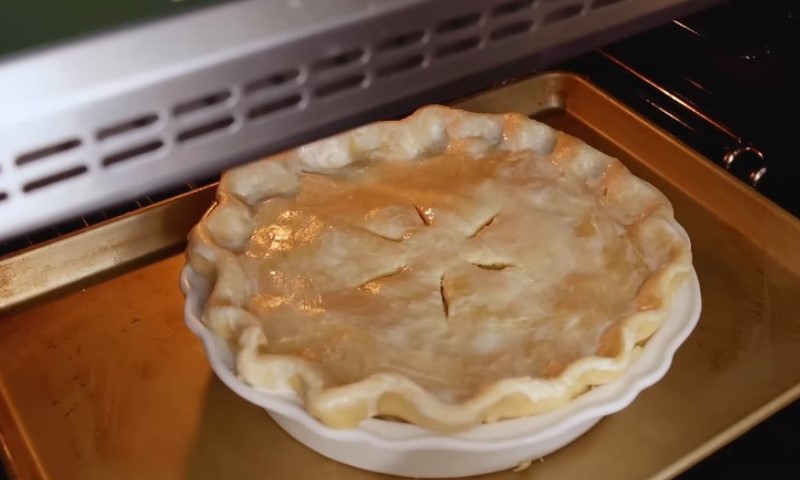
A dependable chicken pot pie filling comes down to a clear ratio of chicken, vegetables, fat, flour, and liquid that produces a sauce thick enough to survive the oven without turning heavy or bland.
Target Yield
- One 9-inch deep dish pie
- Or 6 to 8 individual pot pies using 10 to 12 oz ramekins
A wide, heavy-bottomed skillet matters here, especially when building sauce structure in reliable frypans designed for even heat
Ingredient List (Baseline)
Protein
- 3 to 4 cups cooked chicken, shredded or chopped
Rotisserie chicken, poached breasts, or roasted leftovers all work
Vegetables And Aromatics
- 1 medium onion, diced
- 2 to 3 carrots, diced small but not tiny
- 2 celery stalks, diced
- 2 to 3 cloves garlic, minced, optional
- 1 to 2 cups peas, frozen works well and goes in late
Fat And Thickener
- 5 to 6 Tbsp butter
- 1/3 cup all-purpose flour, about 45 g
Liquids
- 2 1/2 cups chicken stock, low-sodium helps with seasoning control
- 3/4 to 1 cup milk, half-and-half, or cream
Seasoning
- 1 1/2 tsp kosher salt, then adjust
- Black pepper to taste
- 1 to 2 tsp fresh thyme or 1/2 tsp dried
- Optional extras include parsley, a tiny pinch of rosemary, Worcestershire sauce, or a few dashes of hot sauce
That flour-first, stock-and-dairy path sits at the core of most dependable pot pie recipes, including faster skillet versions that skip extra pans.
Step-By-Step Filling Method That Stays Thick After Baking
Cook Vegetables In Stages
Melt butter in a wide skillet or Dutch oven over medium heat. Add onion, carrots, and celery with a small pinch of salt. Cook for 6 to 8 minutes, stirring occasionally, until onion turns translucent and carrots begin to soften.
Carrots need more time than peas. Cooking everything together leads to overcooked vegetables that disappear into the sauce.
Build A Roux In The Same Pan
Sprinkle flour over the vegetables. Stir constantly for 60 to 90 seconds. Aim for a pale, cooked flour smell without browning.
A roux works best when flour coats the fat evenly and cooks long enough to lose raw flavor. That foundation keeps the gravy smooth and stable.
Add Stock Slowly, Then Dairy
Pour in chicken stock in a steady stream while stirring. Simmer for 3 to 5 minutes until thickened. Add milk, half-and-half, or cream and simmer another 2 minutes.
The goal sits just slightly looser than the final texture. Oven heat tightens the sauce more, and cooling thickens it further.
Add Chicken And Quick-Cook Vegetables
Stir in cooked chicken. Add peas last so color and texture stay fresh. Taste and adjust seasoning with salt, pepper, thyme, and any optional additions.
Cool Before Adding Crust
Let the filling cool for 15 to 30 minutes before topping, longer when time allows. Hot filling under raw dough causes steam buildup that softens crust.
Some test kitchens bake cold filling longer on purpose for better crust structure.
Common Filling Problems And Fixes
| Problem | What Usually Happened | Fix |
| Thin, soupy filling | Too little flour or not simmered long enough | Simmer longer. If needed, whisk 1 Tbsp flour with 2 Tbsp soft butter and stir into simmering filling |
| Gluey texture | Too much flour or aggressive boiling | Thin with stock and keep heat gentle |
| Thick in pan, loose after baking | Filling not cooled or weak starch structure | Cool longer. Consider gelatin option below |
| Mushy vegetables | Cuts too small or cooked too long | Dice carrots larger and stop cooking once just tender |
Optional Upgrade: Gelatin For A Silkier Sauce
Some pot pie recipes reinforce body using gelatin. The sauce stays glossy without feeling heavy or pasty.
Simple home method
- Bloom 1 to 1 1/2 tsp powdered gelatin in 2 Tbsp cool stock
- Stir into hot finished filling
Optional step. Helpful when aiming for a restaurant-style finish.
Food Safety And Make-Ahead Guidance
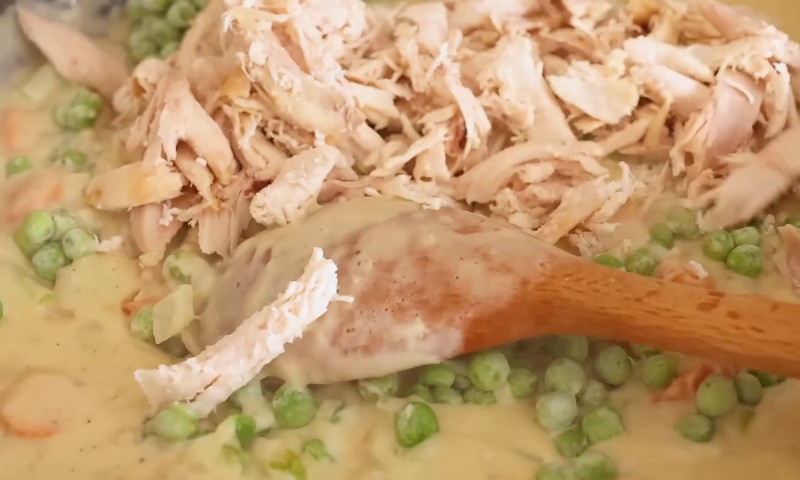
Food safety and make-ahead planning matter just as much as flavor here, since chicken, dairy, and thick sauces all need the right handling to stay safe and taste good later.
Chicken Doneness
Freshly cooked poultry needs to reach 165°F (73.9°C) at the thickest part.
Storage And Reheating
- Cooked chicken and prepared filling keep well for 3 to 4 days in the refrigerator
- Cool filling quickly in shallow containers before covering
- Reheat mixed dishes thoroughly, aiming again for 165°F when cautious
3 Easy Crust Options
Every crust below pairs well with the same filling. Choose based on time and effort.
Crust Option 1: Classic Pie Crust
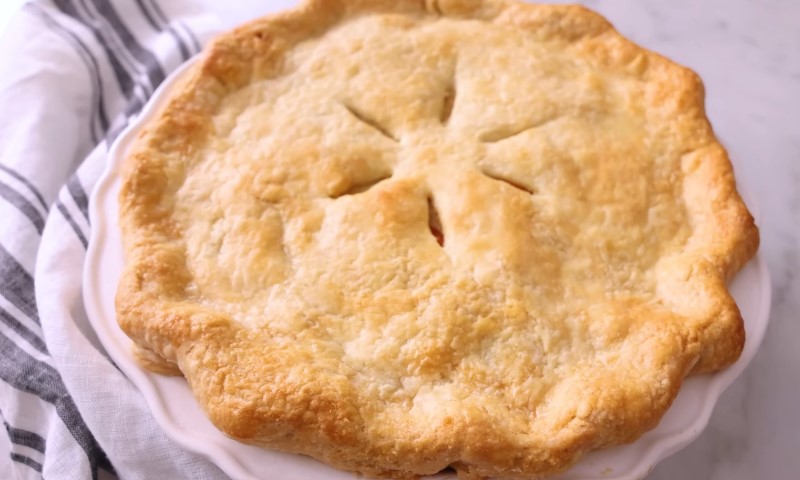
Traditional pie dough delivers flaky edges, crisp tops, and clean slices. All-butter dough performs best when kept cold.
Easiest Method: Top Crust Only
Skipping a bottom crust avoids sogginess and saves time.
Steps
- Roll chilled dough to about 1/8-inch thickness
- Spoon cooled filling into pie dish
- Lay dough over top, trim, and crimp
- Cut 4 to 6 vents
- Brush with egg wash or cream
- Bake at 400°F to 425°F for 35 to 50 minutes
Crust Option 2: Puff Pastry Top
Puff pastry offers dramatic lift and crisp layers with minimal effort. It turns pot pie into something that looks far fancier than the work involved.
Handling Rules
- Thaw pastry in the refrigerator
- Bake in a fully preheated hot oven
Puff pastry performs best between 400°F and 425°F, where steam expands layers quickly.
Sheet Top Method
- Heat oven to 425°F
- Add cooled filling to dish
- Lay pastry over top and trim slightly larger than dish
- Cut vents
- Brush lightly with egg wash
- Bake 20 to 35 minutes until deeply golden
Extra-Crisp Method
Bake pastry separately on a sheet pan, then place on hot filling just before serving. Zero sogginess.
Crust Option 3: Biscuit Topping
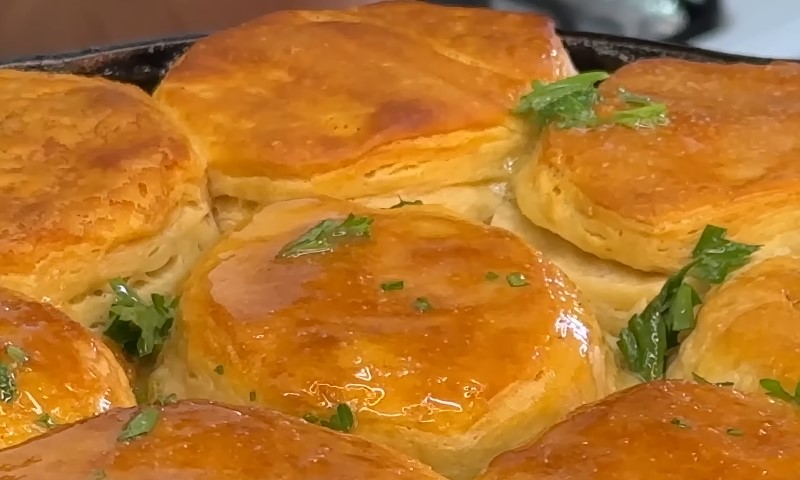
Drop biscuits forgive mistakes. No rolling. No shrinking. Ideal for make-ahead filling.
Simple Drop Biscuit Topping
Ingredients
- 2 cups all-purpose flour
- 1 Tbsp baking powder
- 1 tsp salt
- 6 Tbsp cold butter, cubed
- 1 cup buttermilk or milk
Steps
- Mix flour, baking powder, and salt
- Cut in butter until crumbly
- Stir in liquid just until combined
- Spoon dollops over cooled filling, leaving gaps
- Bake at 400°F for 35 to 55 minutes until golden and bubbling
Let rest before serving so biscuits set properly.
Crust Comparison At A Glance
| Crust | Best For | Skill Level | Bake Temp | Biggest Risk | How To Avoid |
| Classic pie crust | Traditional slices | Medium | 400°F to 425°F | Soggy bottom | Cool filling, vent well |
| Puff pastry | Fast presentation | Easy | 400°F to 425°F | Soft underside | Bake hot, consider separate baking |
| Biscuit topping | Comfort meals | Easy | 400°F | Doughy centers | Space biscuits, rest before serving |
Flavor Variations That Still Taste Like Pot Pie
- Herby classic: thyme, parsley, black pepper
- Savory depth: Worcestershire sauce with a few dashes of hot sauce
- Mushroom-forward: sauté mushrooms until browned before flour
- Turkey version: leftover turkey and turkey stock
- Vegetable-heavy: green beans or corn added carefully to avoid thinning
Six Rules Worth Remembering
- Cool filling before adding crust
- Use low-sodium stock for seasoning control
- Cook flour at least 60 seconds
- Add liquids gradually while stirring
- Vent crust generously
- Bake until filling bubbles visibly
Chicken pot pie rewards patience more than precision. Nail the filling once, and the rest becomes choice, not stress.

Hi there, my name is Kelly Barlow and kellytoeat.com is my blog. Here, I write about various recipes I want to reccommend to readers.
I try to find the best possible recipes that can attract the attention of readers, and at the same time, I strive to write it in the most engaging manner possible.
When I was younger, I wanted to become a chef. Sadly, it wasn’t meant to be, but at the very least, I write about it.