
Leftovers dry out for one main reason: they are reheated with heat alone instead of heat plus moisture control.
Most reheating methods remove water faster than food can redistribute it, leaving meat tough, rice chalky, and pasta brittle.
Reheating properly is not about blasting food until it is hot. It is about restoring heat gradually while preventing moisture loss and protecting texture.
Why Leftovers Lose Moisture When Reheated
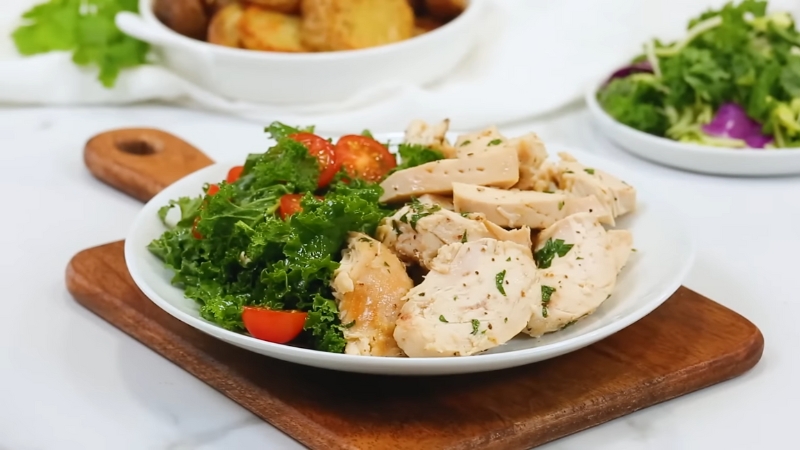
When food cools, moisture migrates and redistributes. Proteins tighten, starches crystallize, and fats solidify. Reheating reverses some of these changes, but only if it happens slowly and evenly.
Drying occurs when:
- The heat is too high
- Food is exposed directly to the air
- Moisture evaporates faster than it can be retained
- The food is reheated multiple times
Microwaves and ovens are not inherently bad. They are just commonly used incorrectly.
The Core Rule: Add Moisture and Cover
Almost all leftovers benefit from added moisture and partial enclosure. Moisture can come from water, broth, sauce, steam, or fat. Covering traps that allow moisture so it re-enters the food instead of escaping.
This principle applies across reheating methods.
Moisture Sources That Actually Work
| Food Type | Best Moisture Addition |
| Meat | Broth, stock, gravy |
| Rice | Water or steam |
| Pasta | Sauce or a splash of water |
| Vegetables | Steam or butter |
| Casseroles | Original sauce |
Reheating in the Microwave (The Right Way)
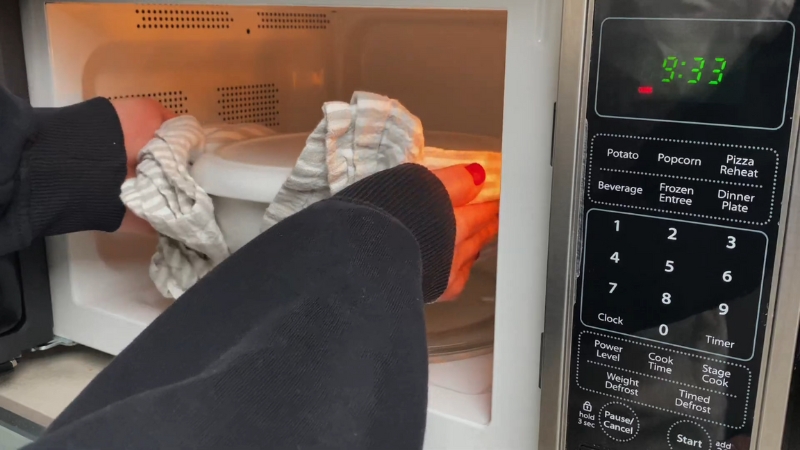
Microwaves dry food because they heat unevenly and excite water molecules directly. Used properly, they can reheat leftovers well.
The key is lower power and longer time.
Steps that matter:
- Reduce power to 50–70 percent
- Add a small amount of liquid
- Cover loosely with a lid or microwave-safe wrap
- Stir or rotate midway if possible
- Let food rest for 30–60 seconds before eating
That rest time allows heat to equalize and moisture to redistribute.
Microwave Reheating Guidelines
| Setting | Result |
| High power, uncovered | Dry edges, cold center |
| Medium power, covered | Evenmoist reheating |
| No rest time | Uneven texture |
Reheating in the Oven (Best for Larger Portions)
View this post on Instagram
Ovens are ideal for reheating meals like casseroles, roasted meats, and baked dishes, but they require patience.
Use lower temperatures and cover the food.
Best practice:
- Set oven to 300–325°F (150–165°C)
- Add moisture if needed
- Cover tightly with foil or a lid
- Reheat until just hot, not bubbling aggressively
- Uncover briefly at the end only if crisping is desired
High heat dries food by driving moisture out before the interior warms.
Oven Reheating Temperature Guide
| Food Type | Temperature |
| Casseroles | 300–325°F |
| Roasted meats | 275–300°F |
| Pasta bakes | 300°F |
| Vegetables | 325°F |
Reheating on the Stovetop (Best Texture Control)
The stovetop offers the most control for foods that can be stirred or turned.
This method works especially well for:
- Pasta
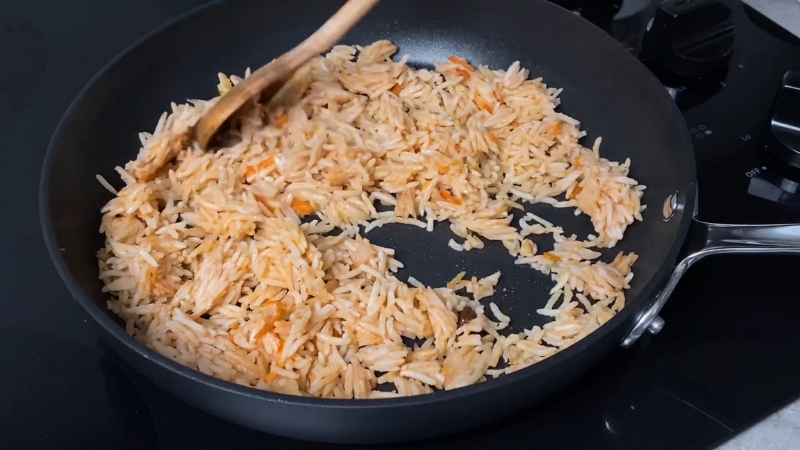
- Rice dishes
- Sauced meats
- Stir-fries
- Soups and stews
Use low to medium heat and add liquid gradually. Stir frequently to distribute heat evenly and prevent sticking.
Stovetop Reheating Outcomes
| Heat Level | Texture Result |
| High heat | Scorched, dry |
| Medium heat | Even, moist |
| Low heat | Best for delicate foods |
Reheating Specific Foods Without Drying Them Out
Different foods fail in different ways. Treating them all the same causes most reheating problems.
Meat and Poultry
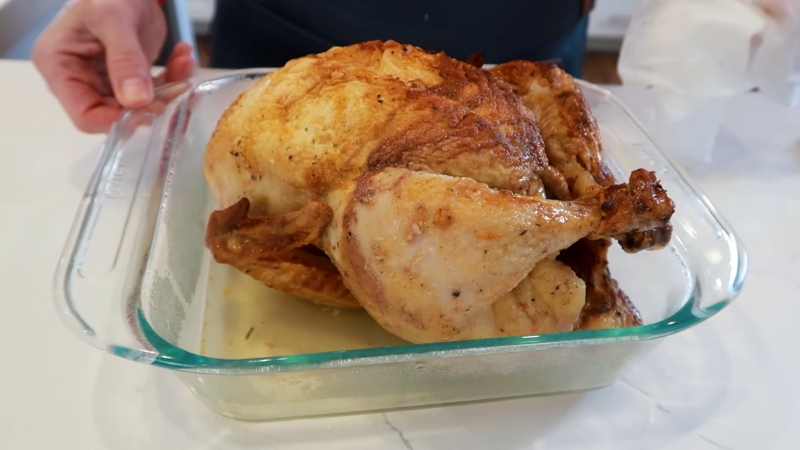
Meat dries because proteins tighten further when overheated.
Best approach:
- Slice large pieces before reheating
- Add broth or gravy
- Cover and reheat gently
- Stop as soon as it is hot
Rice and Grains
Rice dries because starch retrogradation continues when cold.
Best approach:
- Sprinkle water over the rice
- Cover tightly
- Reheat slowly
- Fluff after reheating
Pasta
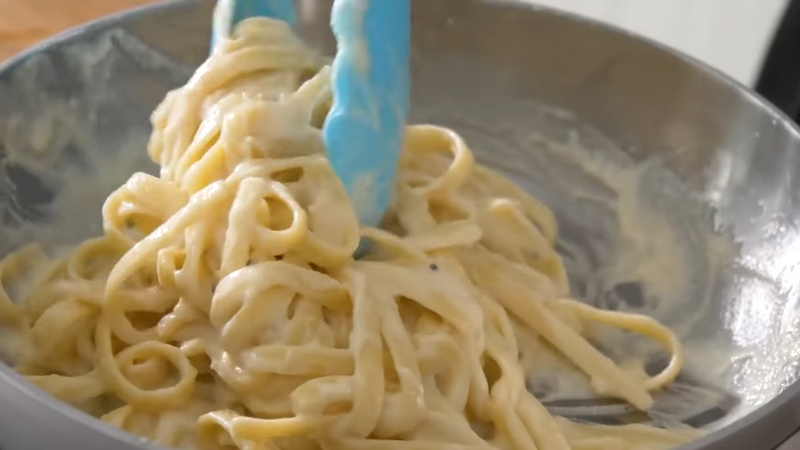
Pasta absorbs sauce when stored and dries quickly when reheated.
Best approach:
- Add extra sauce or a splash of water
- Reheat covered
- Stir halfway through
Vegetables
Vegetables lose moisture and texture quickly.
Best approach:
- Steam briefly
- Add butter or oil
- Avoid high heat
Food-Specific Reheating Methods
| Food | Best Method |
| Roast chicken | Oven, covered |
| Pasta | Stovetop or microwave |
| Rice | Microwave with steam |
| Vegetables | Stovetop or steam |
| Pizza | Oven or skillet |
Why Reheating Once Is Better Than Reheating Often
Each reheating cycle removes more moisture and degrades texture. Leftovers that are reheated multiple times rarely recover.
Best practice:
- Reheat only the portion you plan to eat
- Keep the rest cold
- Avoid repeated heat cycles
This preserves moisture and food safety.
Common Reheating Mistakes That Cause Dryness
Most dryness comes from a small set of habits.
Mistakes and Their Effects
| Mistake | Result |
| High heat | Moisture loss |
| No covering | Evaporation |
| No added liquid | Tough texture |
| Overheating | Protein tightening |
| Multiple reheats | Cumulative drying |
Food Safety Still Matters
Reheating should bring food to 165°F (74°C) internally for safety, but going far beyond that harms texture. Use a thermometer when reheating large portions.
Letting food rest after reheating improves both safety and texture.
Final Perspective
@food52 @f52hotline is here to tell you how to reheat all of your leftovers. #f52hotline ♬ original sound – Food52
Reheating leftovers without drying them out is about controlling heat, moisture, and time. Lower temperatures, added liquid, and proper covering do more for texture than any appliance choice.
Microwaves, ovens, and stovetops can all work well when used deliberately.
When leftovers are reheated gently, and only once, they stop feeling like second-rate meals and start tasting like food that was meant to be eaten again.

Hi there, my name is Kelly Barlow and kellytoeat.com is my blog. Here, I write about various recipes I want to reccommend to readers.
I try to find the best possible recipes that can attract the attention of readers, and at the same time, I strive to write it in the most engaging manner possible.
When I was younger, I wanted to become a chef. Sadly, it wasn’t meant to be, but at the very least, I write about it.