
Monosodium glutamate, commonly called MSG, carries a long-standing stigma in home kitchens. Many cooks avoid it due to fears about health problems that have circulated for decades. Popular opinion often treats MSG as harmful, yet those beliefs grew largely without solid scientific backing.
Fear surrounding MSG developed through repetition rather than proof. Cooking decisions benefit when facts replace myths, especially when a seasoning has such a strong impact on flavor.
MSG is safe, widely used, enhances flavor, and deserves renewed consideration by home cooks.
Let’s discuss it.
Where the Fear Came From
In 1968, a short letter published in The New England Journal of Medicine described symptoms such as numbness, weakness, and heart palpitations after eating Chinese food. The author of the letter did not present clinical trials, structured observation, or measured intake levels.
Experience described relied entirely on personal observation, yet publication in a respected medical journal gave the claim immediate credibility.
No experiments accompanied the claim, and no direct evidence identified MSG as the cause. Despite that absence, public reaction accelerated once newspapers and television programs repeated the story.
Media framing treated correlation as causation, creating certainty where none existed.
Several conditions helped the idea spread rapidly. Focus locked onto MSG while the dining context received little attention. Portion size, meal composition, and eating speed were rarely discussed.
- alcohol consumption is commonly paired with restaurant meals
- high overall sodium content unrelated to MSG alone
- multiple dishes eaten at once rather than isolated ingredients
The phrase “Chinese Restaurant Syndrome” entered popular vocabulary soon after. Language choice mattered.
Labeling the phenomenon around Chinese restaurants attached fear to a specific cuisine rather than to eating habits common across many dining styles. Western foods using similar flavor enhancers avoided similar scrutiny.
Cultural bias shaped public response. Fear gained traction through repetition in headlines and talk shows, not through controlled evidence. Negative perception formed socially, hardening long before research had space to respond.
Assumption gradually replaced skepticism, and correction lagged far behind the initial narrative.
What the Science Actually Says
Scientific consensus developed over decades of research rather than anecdotes. Major food safety organizations, including the FDA and EFSA, classify MSG as generally recognized as safe when consumed at normal levels.
Controlled experiments attempted to reproduce reported symptoms under blinded conditions.
Results consistently showed no reliable connection between MSG intake and headaches or chronic health problems. Participants often failed to identify meals containing MSG when compared to identical meals without it.
- no consistent causal link between MSG and adverse reactions
- symptom reports drop sharply under blinded testing
- long-term health harm lacks credible evidence
Small subsets of people may experience mild reactions such as flushing or headache at extremely high doses or when MSG is consumed alone without food.
Occurrences remain rare, temporary, and not medically serious. Overall evidence does not support historical fear narratives tied to MSG.
MSG vs. Salt
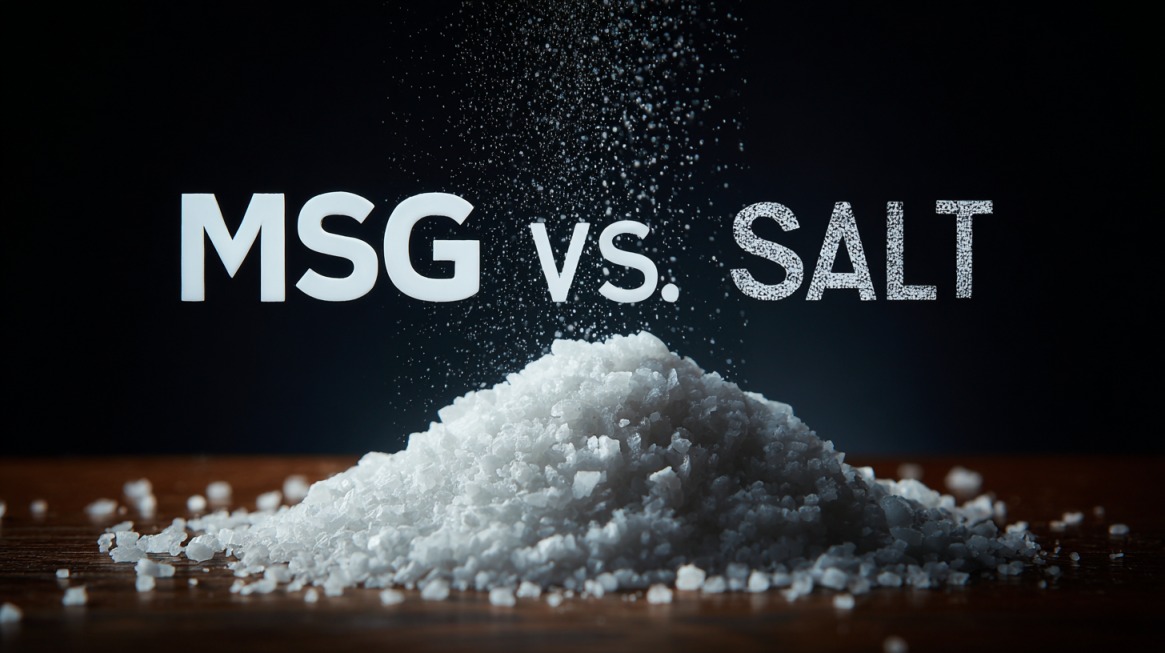
MSG contains roughly one-third the sodium found in table salt, which changes how seasoning decisions can be made. Flavor impact stays strong even as sodium levels drop, allowing cooks to maintain satisfaction and mouthfeel while using less salt overall.
Savory intensity arrives faster, meaning fewer grams of sodium are needed to reach a pleasant taste threshold.
Studies demonstrate that replacing a portion of added salt with MSG preserves taste while lowering sodium intake.
Reduced sodium consumption supports healthier blood pressure levels, especially for people managing cardiovascular risk or following doctor-recommended limits.
Meals seasoned with a combination of salt and MSG often score equally or higher in taste preference tests compared to fully salted versions.
Umami enhancement creates fullness on the palate. Savory perception increases without stacking additional salt, which helps dishes taste complete rather than thin or flat. Foods retain character even after sodium reduction, making long-term dietary changes easier to sustain.
Why Professional Cooks Love MSG
Professional kitchens prioritize consistency, efficiency, and flavor reliability.
MSG supports all three by reinforcing savory notes without masking herbs, spices, or primary ingredients. Recipes behave more predictably, which matters in high-volume service.
Culinary acceptance has grown as chefs speak openly about its role. Cookbook authors and restaurant professionals describe MSG as a foundational seasoning alongside salt and sugar. Transparency around its use reflects confidence rather than secrecy.
Creative applications sometimes extend into desserts. Small amounts intensify existing flavors rather than adding savory character.
Chocolate, caramel, and nut-based sweets benefit from sharper contrast and improved clarity.
View this post on Instagram
How to Use MSG at Home Without Overdoing It
Restraint matters. About one quarter to one half teaspoon per four-serving dish usually delivers noticeable improvement without excess. Flavor should feel rounded rather than obvious.
MSG performs best during cooking rather than as a finishing sprinkle. Heat helps dissolve it evenly and distribute flavor across the dish, preventing uneven pockets of intensity.
- soups, broths, and stews
- stir-fries with vegetables or proteins
- marinades, sauces, and pasta dishes
Salt still plays a role. Salty taste and umami enhancement serve different functions and work best together. Popular home uses also include popcorn and roasted nuts, where small amounts create fullness without heaviness or sharpness.
@food52 There’s a lot of misinformation about MSG (monosodium glutamate) which exists in many of our favorite foods. Lucas SIn breaks down how to use it in his Grilled Cumin Lammb Skewers at the link in our bio. #f52community ♬ original sound – Food52
The Verdict
Fear tied to MSG traces back to outdated anecdotes rather than reliable science. Modern research supports safety and practical benefits.
MSG improves flavor while helping reduce sodium intake.
Thoughtful use turns it into a valuable seasoning that restores savory depth and balance in everyday cooking.

Hi there, my name is Kelly Barlow and kellytoeat.com is my blog. Here, I write about various recipes I want to reccommend to readers.
I try to find the best possible recipes that can attract the attention of readers, and at the same time, I strive to write it in the most engaging manner possible.
When I was younger, I wanted to become a chef. Sadly, it wasn’t meant to be, but at the very least, I write about it.