
Leftover pizza can be great, or it can turn rubbery, soggy, dry, or weirdly tough in under 2 minutes. Most of the difference comes down to heat level, timing, and how much moisture escapes during reheating.
Food safety matters too. Pizza should be refrigerated within 2 hours, kept cold at 40°F or below, and reheated to 165°F if you want to follow USDA and CDC leftover guidance. FoodSafety.gov also lists leftover pizza at 3 to 4 days in the fridge and 1 to 2 months in the freezer.
A good reheating method depends on what you care about most. If you want a crisp crust and can wait a few minutes, use the oven. If you want speed and surprisingly strong texture, use the air fryer. If you just need lunch hot fast, the microwave still has a place, though it usually gives the weakest crust.
Our recommendations are air fryer and skillet methods above the microwave, with the oven close behind when done on a hot surface.
Why Reheated Pizza So Often Goes Wrong
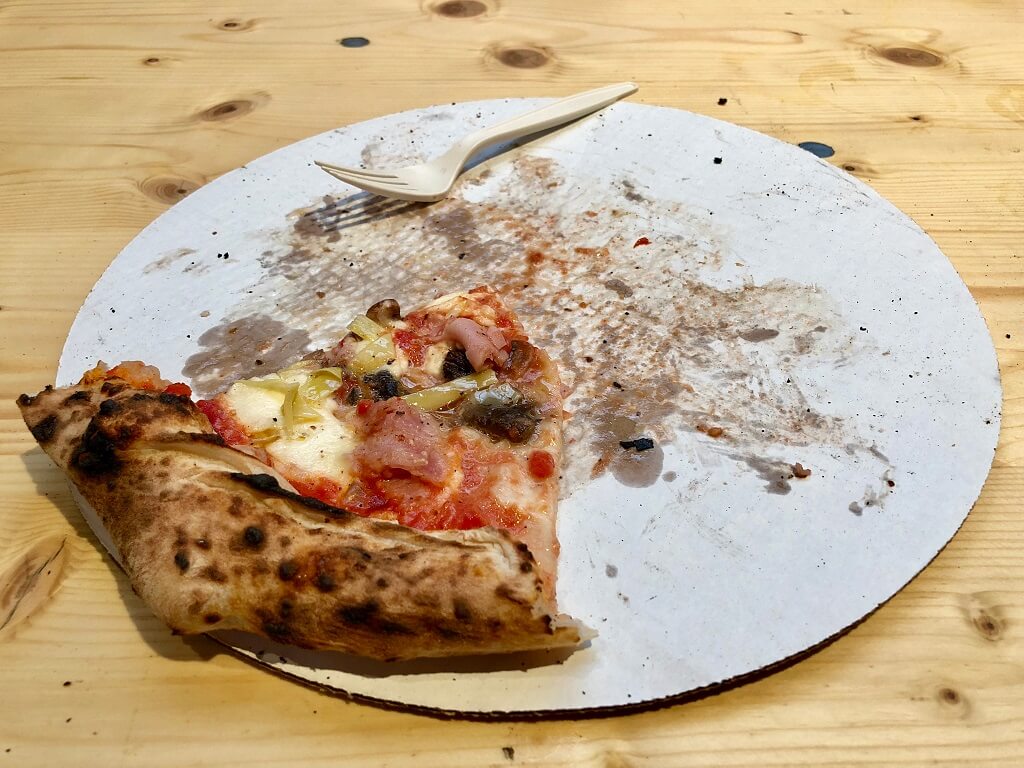
Pizza is a mix of bread, cheese, sauce, oil, and toppings that all react differently to heat. Crust wants dry heat so it can crisp. Cheese wants gentle heat so it melts without breaking. Toppings, especially vegetables and cured meats, can release extra moisture or dry out fast.
Serious Eats explains the core problem well: reheating drives off water, and once too much moisture leaves the crust, texture suffers.
Their testing and explanation of starch behavior point to a simple rule. Gentler reheating preserves texture better than blasting a slice with harsh heat right away.
In practical terms, that means:
- Very high heat can crisp the bottom fast, but dry the top
- Microwave heat works quickly, but often warms unevenly
- Covered heat can help melt cheese without turning toppings leathery
- A hot surface under the slice usually helps more than hot air alone
First, Store It Properly
Good leftovers start before reheating. Pizza that sat out half the night is a different story from pizza boxed and chilled after dinner.
FoodSafety explains that perishable leftovers should go into the refrigerator within 2 hours, or within 1 hour if the temperature is above 90°F.
Leftovers generally keep 3 to 4 days in the fridge. FoodSafety’s cold storage chart specifically lists pizza at 3 to 4 days refrigerated and 1 to 2 months frozen.
Best Storage Habits for Pizza
- Cool slices quickly and refrigerate them within 2 hours
- Stack with parchment or wax paper between slices if needed
- Use an airtight container or wrap well
- Avoid crushing toppings under heavy containers
- Freeze extra slices early if you know you will not eat them within 3 to 4 days
Cold pizza straight from the fridge reheats more predictably than pizza that has spent too long warming and cooling on the counter.
The Best Method for Most People: Oven
The oven remains the safest all-around choice when you want a slice that feels close to fresh. It handles more than one slice well, gives the crust a chance to crisp, and heats toppings more evenly than a microwave.
Food & Wine tested several methods and gave oven reheating high marks when slices were placed on a preheated pizza stone or heavy pan at 475°F for 2 to 4 minutes. Their testers found the crust crisp, and the toppings evenly warmed.
How to Reheat Pizza in the Oven
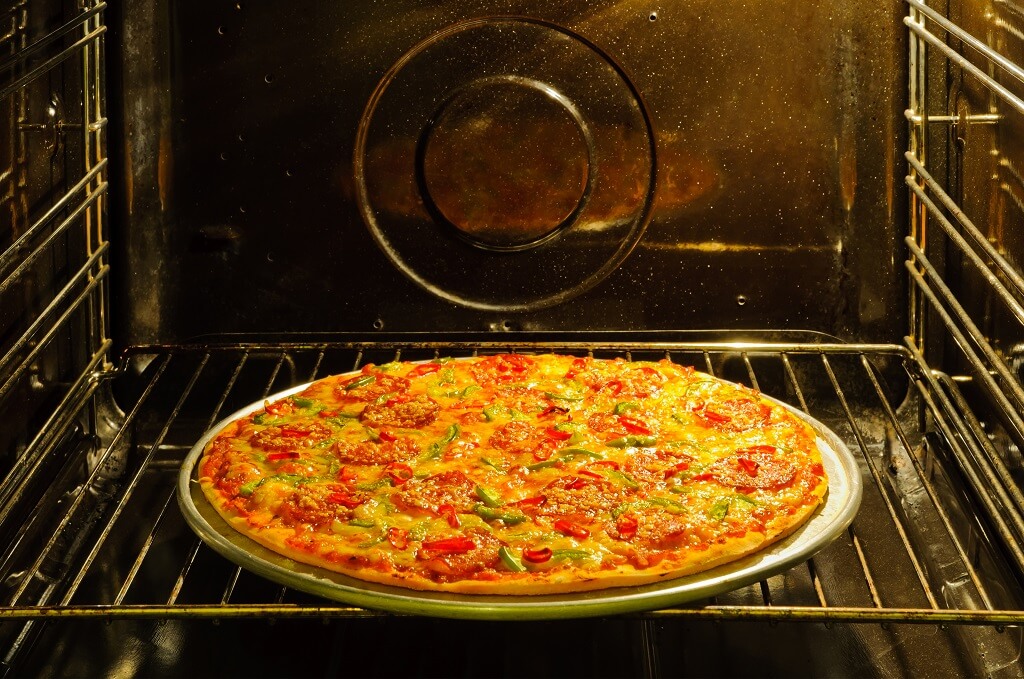
For 1 to 6 slices:
- Put a sheet pan, pizza stone, or heavy upside-down cast-iron pan in the oven.
- Preheat to 425°F to 475°F.
- When hot, place the pizza directly on the pan or stone.
- Heat for 3 to 6 minutes.
- Pull it when the cheese loosens and the bottom is crisp.
For thicker slices, deep-dish, or heavily topped pizza, stay closer to 425°F and add another minute or two. For thin New York-style slices, 450°F to 475°F usually works better.
Oven Tips That Actually Help
- Preheat the surface, not just the oven air
- Keep slices spaced apart
- Check early, especially with thin crust
- For dry-looking pizza, loosely tent the top with foil for the first half of reheating
- Avoid leaving slices in too long after the cheese melts
Oven reheating is especially good for:
- Several slices at once
- Thin crust
- Large foldable slices
- Pizza with a soft center and crisp bottom
Fastest Crisp Results: Air Fryer
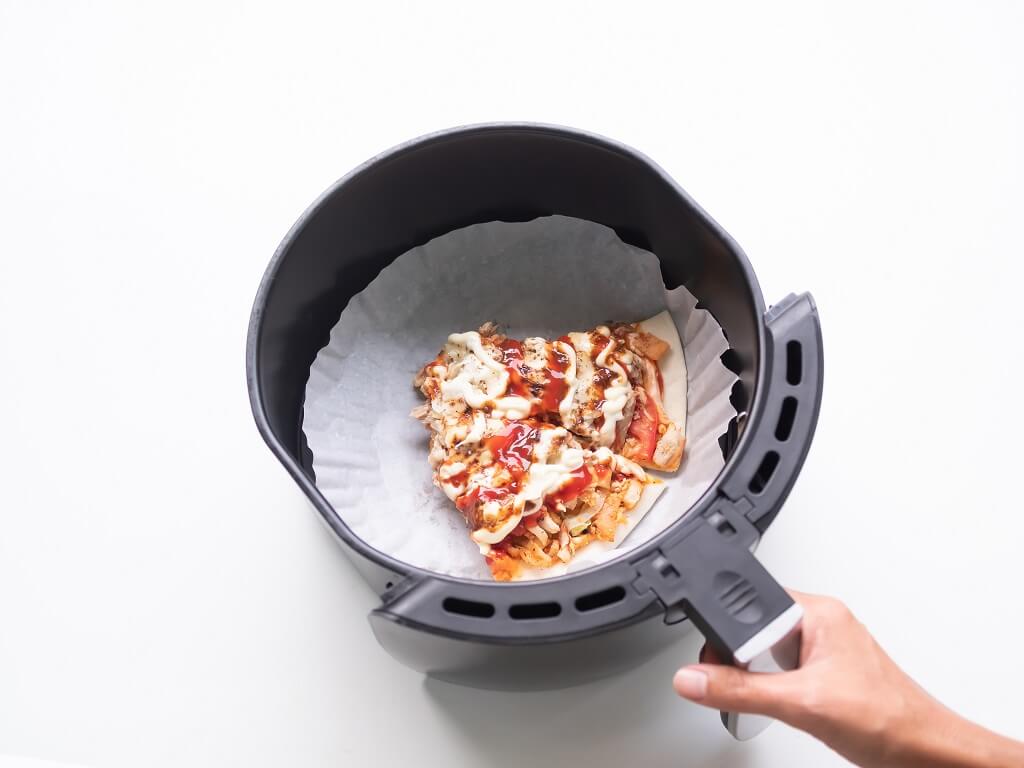
Air fryers are excellent for pizza, especially one or two slices. The result is a very crisp crust and nicely revived toppings, though the tip of the slice could dry a bit.
How to Reheat Pizza in the Air Fryer
- Place 1 or 2 slices in a single layer
- Set the air fryer to 350°F
- Heat for 2 to 4 minutes
- Check after 2 minutes
- Remove as soon as the cheese is hot and the bottom firms up
Heavier slices may need 4 to 5 minutes. Thin slices can overcook quickly, so keep an eye on them.
When the Air Fryer Works Best
Air fryer reheating shines when you want:
- One quick lunch slice
- Crisp pepperoni edges
- Firm bottom crust
- Minimal wait time
It is less ideal when you have a full box to reheat or when the slice has delicate toppings like fresh basil, arugula, or burrata that can scorch or wilt too hard under circulating heat.
Air Fryer Mistakes to Avoid
- Overlapping slices
- Starting too hot
- Walking away for 5 minutes
- Reheating very greasy slices until the cheese separates
A short cook time matters more than a high setting. Pizza goes from revived to overdone fast in an air fryer.
The Emergency Option: Microwave
The microwave gets a bad reputation for good reason. You get tough outer crust and uneven heating, even when a mug of water sits beside the plate.
Still, the microwave can be useful when speed matters more than texture.
How to Reheat Pizza in the Microwave
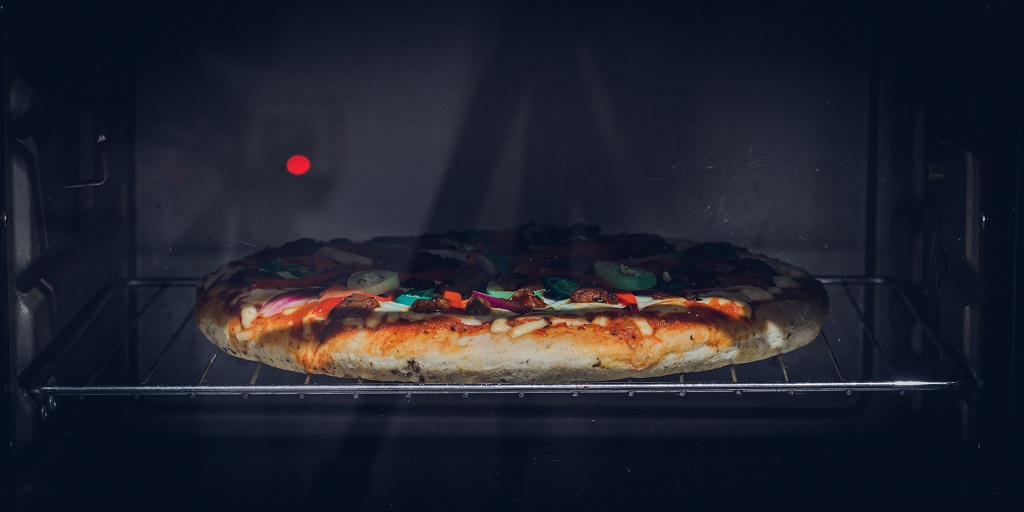
- Put the slice on a microwave-safe plate
- Cover loosely, or use a microwave-safe cover
- Heat in 30-second bursts
- Rotate or reposition between bursts if needed
- Stop as soon as the cheese is hot
USDA guidance for microwave reheating says leftovers should be covered and rotated for even heating, and CDC says reheated leftovers should reach 165°F.
A Few Tricks That Improve Microwave Pizza
- Put a plain microwave-safe paper towel under the slice to absorb some moisture
- Heat in short bursts instead of one long cycle
- Let the slice rest for 30 seconds before eating
- For better texture, finish it for 1 minute in a hot skillet if possible
Even with good technique, microwave pizza usually ends up softer and chewier than oven or air fryer pizza. That does not make it useless. It just makes it the convenience choice.
Quick Comparison Table
| Method | Best For | Typical Temp | Typical Time | Texture Result |
| Oven | 2 to 6 slices, balanced results | 425°F to 475°F | 3 to 6 min | Crisp bottom, even melt |
| Air Fryer | 1 to 2 slices, fast reheating | 350°F | 2 to 4 min | Very crisp crust, fast |
| Microwave | Fastest option, office lunch | High power, short bursts | 30 to 90 sec | Soft crust, less even heating |
Test kitchen reporting from Food & Wine strongly favored air fryer and covered-skillet reheating, while Serious Eats pointed to lower, gentler reheating as a key reason some methods preserve texture better than others.
How Different Pizza Styles Behave
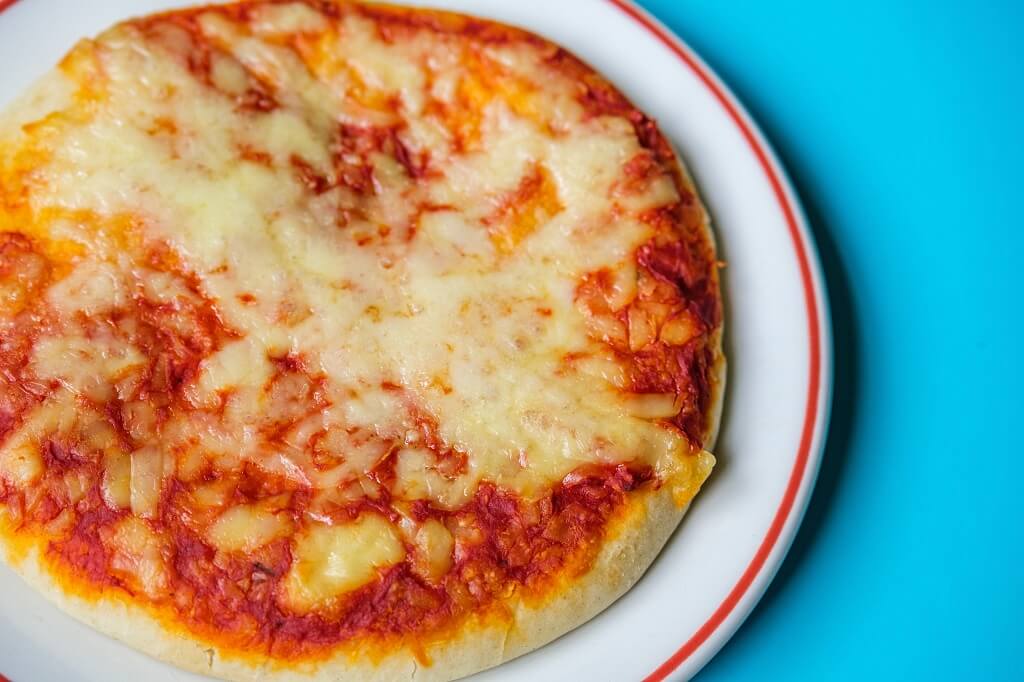
Not all leftover pizza reheats the same way.
Thin-Crust Pizza
Thin crust reheats quickly and benefits from high heat and short cook times. Oven and air fryer both work well. Microwave often turns the outer edge tough.
New York-Style Slices
Big foldable slices usually do best in the oven or in a pan. A hot preheated tray helps restore the bottom. Air fryer works too, but the pointed tip can dry before the middle fully warms.
Deep-Dish and Pan Pizza
Lower heat for slightly longer works better here. Too much top heat too fast can burn the cheese before the dense interior warms. Aim for the oven at about 400°F to 425°F, and give it extra time.
Toppings-Heavy Pizza
Vegetable-loaded slices release moisture as they warm. Give them space and check often. Air fryer can work, but oven reheating is often easier to control.
FAQs
Small Habits That Make Leftovers Taste Better
A few simple choices have an outsized effect on the final slice:
- Reheat from refrigerated, not room-temperature, pizza
- Use a hot surface for better crust
- Avoid overcrowding
- Pull the slice the moment it is ready
- Add fresh basil, chili flakes, or grated parmesan after reheating, not before
- For very dry slices, a light cover during part of reheating can help
One more practical point: pepperoni, sausage, and cheese pizzas usually bounce back better than veggie slices loaded with watery toppings. Mushrooms, tomatoes, and peppers can soften the crust during storage, so even perfect reheating has limits.
Final Thoughts
Good leftover pizza comes down to control. Oven reheating gives the most reliable all-purpose result. Air fryer wins on speed and crispness for one or two slices. Microwave works when time matters more than texture.
Store pizza properly, heat only what you need, and stop reheating the moment the slice is hot. That is usually the difference between sad leftovers and a lunch you genuinely want.

Hi there, my name is Kelly Barlow and kellytoeat.com is my blog. Here, I write about various recipes I want to reccommend to readers.
I try to find the best possible recipes that can attract the attention of readers, and at the same time, I strive to write it in the most engaging manner possible.
When I was younger, I wanted to become a chef. Sadly, it wasn’t meant to be, but at the very least, I write about it.