
Low-calorie cereal is often marketed as a smart breakfast choice for weight loss and better health. Boxes promote slim figures, heart icons, and bold calorie counts that make the product look like an easy win for anyone trying to cut calories.
Many consumers assume that choosing low-calorie cereal automatically supports fat loss and steady energy.
Ready-to-eat cereal has dominated breakfast tables for decades, especially in children’s diets. Convenience and taste helped it secure a permanent spot in many households. Yet sugar content, refined carbohydrates, and limited protein can create drawbacks that interfere with sustained energy and appetite control.
Marketing can make low-calorie cereal look ideal, but ingredient lists and nutrition panels tell a more complicated story.
With that in mind, let me tell you what you should know regarding low-calorie cereals.
Cereal Option #1: Special K and Similar Weight-Loss Cereals
@mollybaz #SpecialKPartner woweeeeeeee y’all…..doesn’t get more full circle than this. This Special Edition box is no longer available but @SpecialK can still be found anywhere cereal is sold, so next time you pour yourself a bowl make sure you do it right the way aka ICE+SALT ARE NON-NEGOSH, and lemme know what you think okay????? #SpecialKMyWay ♬ original sound – Molly Baz
Special K built its reputation on weight-management messaging, including promotional challenges that encouraged replacing meals with cereal.
Low fat content and relatively low calorie counts per labeled serving helped position it as a go-to low-calorie cereal for dieters.
Serving size plays a major role in how these numbers look on paper.
- Around 100 to 120 calories per 1 cup serving
- Approximately 6 to 8 grams of sugar per serving
- Often only 2 to 3 grams of fiber
- Typically 2 to 6 grams of protein, depending on the variety
Despite its marketing, Special K remains primarily grain-based. Protein content is limited, and fiber levels are modest. Many people feel hungry shortly after finishing a bowl, especially if breakfast lacks added protein or fat.
Cereal Option #2: Bran Cereals with High-Fiber Claims
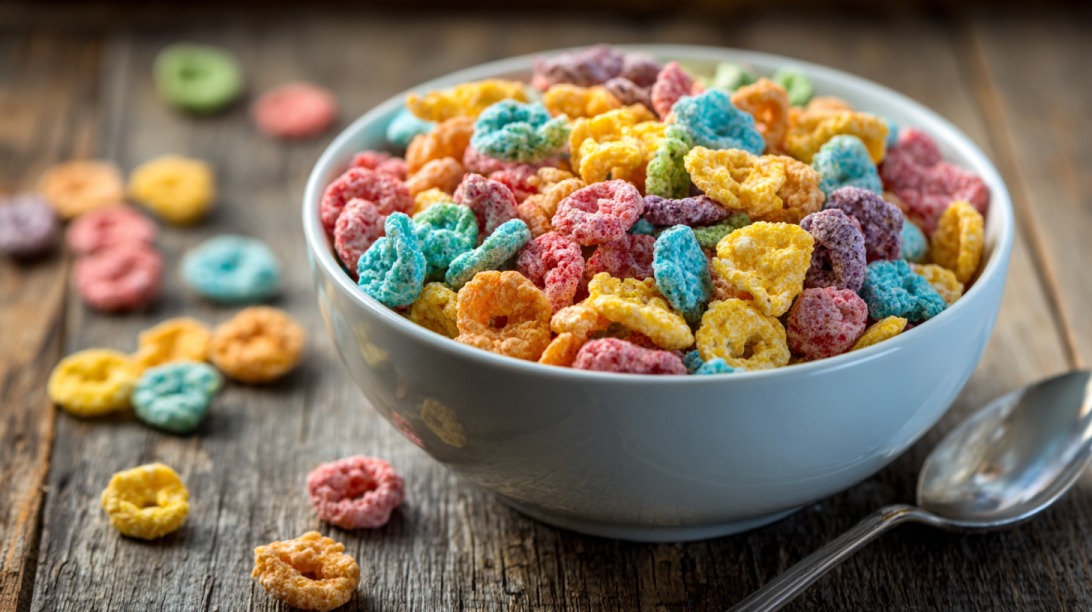
Bran cereals such as All-Bran and bran flakes are promoted for digestive health because of their fiber content. Fiber can support bowel regularity and contribute to fullness.
Macronutrient totals tell a more layered story.
- Significant net carbohydrates
- Multiple teaspoons of sugar
- Calorie totals that add up quickly in larger bowls
Fiber does not erase carbohydrate load. High carbohydrate intake can blunt potential benefits for blood sugar control, especially in individuals who are insulin resistant or actively limiting carbs.
Some products combine wheat bran with added sugar to improve taste. The resulting formula can create a contrast between impressive fiber numbers and meaningful sugar intake.
Low-calorie cereal in this category may support digestion, yet still challenge calorie control and glycemic stability when portion sizes grow.
Cereal Option #3: Granola and Natural Cereals
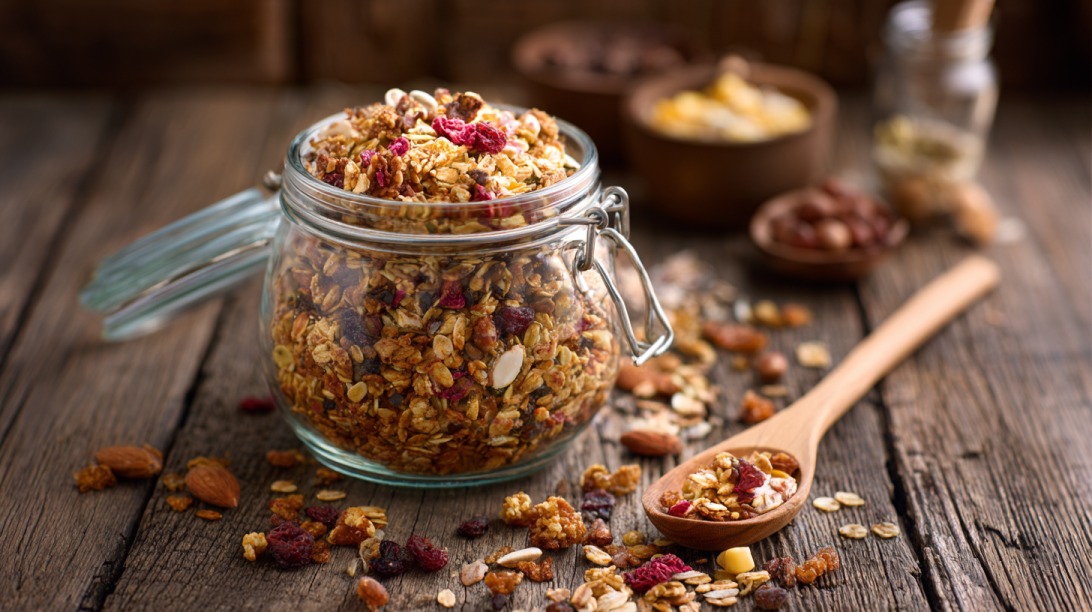
Granola and muesli often project a wholesome image because they contain oats, nuts, and seeds. Dried fruits, honey, syrups, and sweeteners frequently add substantial sugar.
Sugar content in certain products can reach 10 to 14 teaspoons per 100 grams.
Calorie density is another key issue. Nuts and sweeteners significantly raise total energy per serving. Half a cup of granola can deliver calorie totals similar to a full meal, especially when paired with milk or yogurt.
Portion size is rarely intuitive with granola. A small bowl can easily double the intended serving.
- High fat due to nuts and added oils
- Concentrated carbohydrate load
- Limited protein relative to calorie content
Natural branding does not guarantee metabolic support. High energy density combined with added sugars can undermine calorie goals quickly.
Cereal Option #4: Puffed Rice and Rice-Based Cereals
Puffed rice cereals appear light and airy, giving an impression of minimal calories. The primary ingredient is rapidly digesting starch.
- About 80 grams of net carbohydrates
- Sugar equivalency close to 20 teaspoons
Low-fat and low-protein content contribute to fast digestion. Mild flavor often encourages sweetened milk, flavored yogurts, or added sugar. The combined effect can amplify total sugar exposure early in the day.
The glycemic impact of puffed rice is typically high due to its refined structure and low fiber.
- Spike blood glucose quickly
- Lead to sharp energy drops
- Trigger hunger within a short period
Airy texture does not translate into sustained fullness.
Cereal Option #5: Corn Flakes and Similar Classics
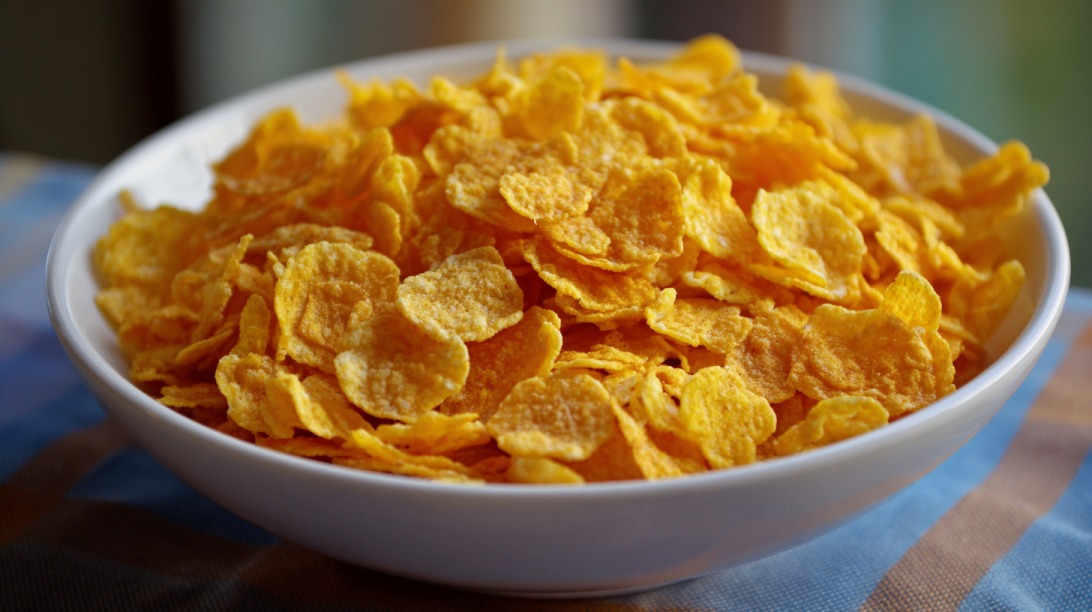
Cornflakes are marketed as simple and low in fat. Carbohydrate content remains high, and sugar levels can reach approximately 20 teaspoons per 100 grams in some formulations.
Rapid digestion is common unless cereal is paired with protein and fat. On their own, corn flakes provide mostly refined carbohydrates with minimal fiber.
- Sweetened milk increases sugar and calories
- Bananas or other fruit add additional carbohydrate
- Large bowl sizes multiply total energy quickly
Many people pour well above the suggested serving size. Low-calorie cereal in this category can quietly become a high-calorie breakfast, especially when calorie tracking is inconsistent.
Cereal Option #6: Multigrain or Protein-Enhanced Cereals
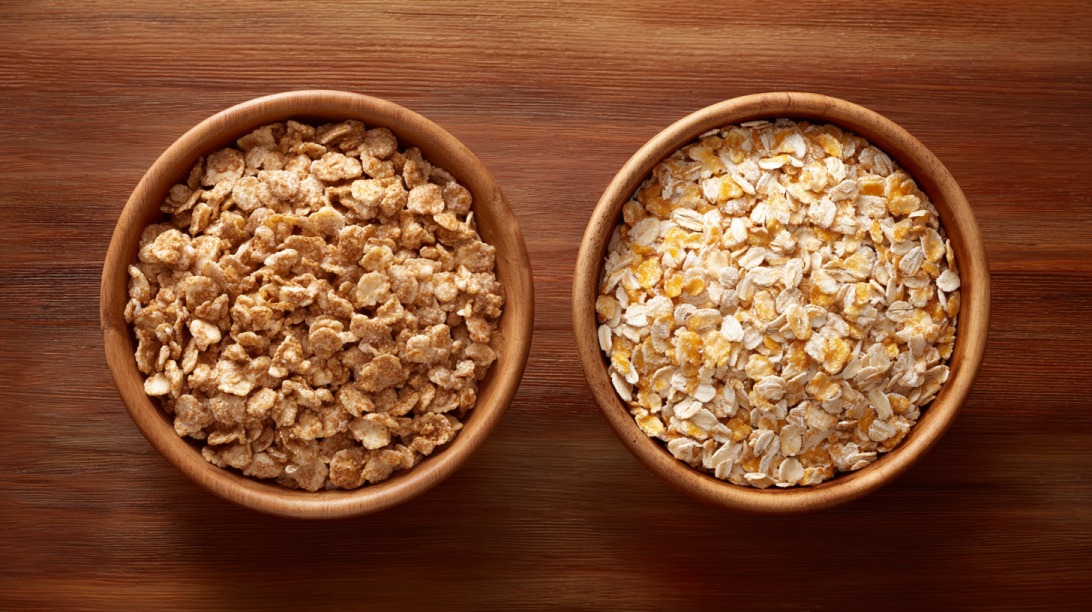
Multigrain cereals and products labeled as protein-enhanced promise improved balance. Added protein may slightly improve satiety, yet ingredient lists often still feature refined grains and added sugars.
Protein numbers can look attractive on the front of the box.
- Moderate protein increases paired with high carbohydrate totals
- Added isolates or concentrates rather than whole-food protein
- Sugar content that offsets potential metabolic benefits
Higher protein does not automatically neutralize glycemic load. Some whole-grain or sprouted-grain cereals, including ancient grains or sprouted bases, offer better fiber and protein ratios. Even so, portion control remains critical.
Cereal Option #7: Fortified Low-Calorie Cereals
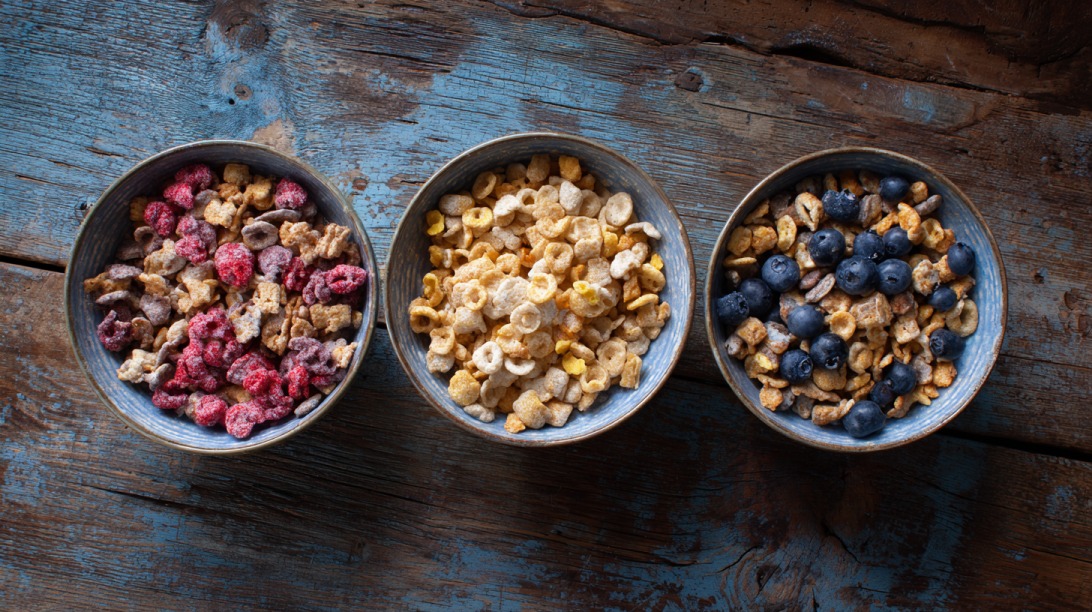
Fortified low-calorie cereal often lists a wide range of vitamins and minerals. Added micronutrients can help address certain deficiencies, but do not replace essential macronutrients. Most of these cereals taste good with water and are way healthier than milk!
- Multiple B vitamins added
- Iron and sometimes vitamin D
- Minimal naturally occurring healthy fats
Refined grains and added sugars remain common foundations. Taste is often maintained through sweeteners, which may increase cravings later in the day.
Fortification can improve micronutrient intake, yet it does not transform a highly processed, sugar-heavy cereal into a balanced meal. Sustainable progress with low-calorie cereal still depends on protein adequacy, fiber quality, portion awareness, and overall dietary pattern.
Realities From Cereal Nutrition Research
Nutrition research based on ready-to-eat cereals marketed to children shows that many products have shifted toward less favorable nutrient profiles in recent years.
A study examining 1,200 cereals introduced or reformulated in the U.S. grocery market between 2010 and 2023 found that average amounts of sugar, total fat, and sodium per serving rose over time.
Protein and dietary fiber levels declined in many of the cereals reviewed. These trends suggest an overall reduction in nutrient balance for many products commonly eaten at breakfast.
Across the 13 years analyzed, total fat per serving increased by more than 30% while sodium grew by around a third, and sugar content climbed nearly 11%. At the same time, mean protein levels dropped, and dietary fiber showed a downward movement in recent years.
Higher sugar and sodium, paired with lower protein and fiber, can weaken the ability of low-calorie cereal to support satiety and stable energy throughout the morning.
Even though these trends were observed specifically in cereals targeted to younger consumers, they reflect broader concerns about nutrient quality in many packaged breakfast cereals.
Trends such as rising added sugar and declining core nutrients contribute to the debate around how cereal fits into a health-conscious diet and highlight the importance of reading nutrition labels carefully rather than relying on front-of-package marketing claims.
Closing Thoughts
Low-calorie cereal can exist within a calorie-controlled plan, yet calorie numbers alone do not guarantee support for fat loss or metabolic health. Sugar content, fiber levels, protein quantity, and ingredient quality all matter.
Selecting low-calorie cereal with meaningful fiber and protein may improve satiety and energy balance.
Pairing cereal with plain Greek yogurt, nuts, or other whole foods can increase protein and healthy fat intake. Careful portion control remains essential.
Balanced breakfasts built on adequate protein, healthy fats, and minimally processed ingredients often provide stronger support for long-term progress than relying on packaged low-calorie cereal alone.

Hi there, my name is Kelly Barlow and kellytoeat.com is my blog. Here, I write about various recipes I want to reccommend to readers.
I try to find the best possible recipes that can attract the attention of readers, and at the same time, I strive to write it in the most engaging manner possible.
When I was younger, I wanted to become a chef. Sadly, it wasn’t meant to be, but at the very least, I write about it.